 Request a Quote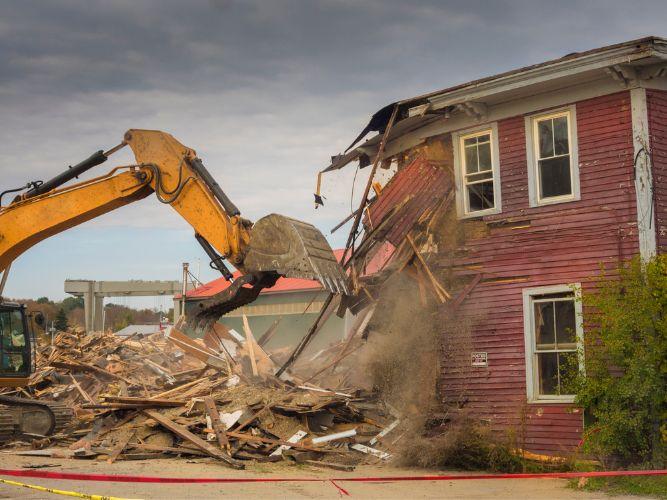
Whether you're tearing down a single-family home to build your dream house or removing a commercial structure to make way for new development, demolition requires careful planning, proper permits, and professional expertise. This guide walks you through everything you need to know to plan a successful demolition project in Winnipeg—from choosing the right method to navigating city permits and preparing your property.
Not all demolition is created equal. Before you file paperwork or hire contractors, you need to determine which approach best fits your project goals, budget, and timeline.
Mechanical Demolition is the most common and cost-effective method. Heavy machinery like excavators and bulldozers tear down the structure quickly, and debris is hauled away in dumpsters. This method is fastest and works well when you don't need to salvage materials. Most residential and commercial projects use this approach.
Deconstruction takes a more mindful, manual approach. Workers carefully dismantle the building to salvage reusable materials like wooden beams, flooring, fixtures, and bricks. These materials can be reused in your new build, sold, or donated to organizations like Habitat for Humanity for tax benefits. Deconstruction takes longer and costs more due to labor intensity, but it's better for the environment and can offset costs through material recovery and tax write-offs.
Selective Demolition removes specific portions of a structure while preserving the rest. This precision approach is ideal for renovations where you want to keep certain walls, foundations, or architectural features intact. It requires careful planning to protect existing structures and often involves hazardous material removal like asbestos or lead.
Your choice depends on your priorities. If speed and low cost matter most, choose mechanical demolition. If sustainability and material recovery are important, consider deconstruction. If you're renovating rather than rebuilding, selective demolition is likely your best option.
In Winnipeg, demolition permits are mandatory for most projects. Understanding these requirements early prevents costly delays.
A demolition permit is an official authorization granted through the City of Winnipeg under Section 14 of the Winnipeg Building By-law. It authorizes the demolition, removal, or alteration of any building or structure and applies to both residential and commercial properties.
You need a demolition permit anytime you plan to remove, alter, or demolish a building or structure, including partial demolition projects. This applies whether or not you intend to rebuild on the site.
Exceptions are limited. You do not need a demolition permit for detached accessory structures smaller than 10 square metres (108 square feet), such as small sheds. However, a licensed demolition contractor is still required for the permit application itself, with exceptions only for residential accessory structures like decks, detached garages, carports, storage sheds, gazebos, and workshops.
Submit your application package to the Zoning and Permits branch online, by email, or by mail. Your package must include:
A completed application form naming a licensed demolition contractor, a letter of authorization for commercial projects or an owner statement for residential projects (not required if the owner is the applicant), a Status of Title dated within three months of the application date, and a site plan or Building Location Certificate clearly identifying the buildings to be demolished and their distances from property lines. Depending on your project, an Engineer's Report may also be required.
Once issued, your demolition permit requires action. Demolition must begin within 30 days and be completed within 60 days including cleanup, unless you request and receive an extension. Mandatory inspections must be arranged during this timeframe, with the final inspection occurring after demolition is complete.

Before any demolition begins, you must ensure the property is safe and compliant. This includes two critical inspections.
If your building was constructed before 1990, you must have it inspected for asbestos. In Manitoba, any product suspected to contain asbestos must be tested in a laboratory. If materials are not tested but suspected of containing asbestos, they must be treated as if they do contain asbestos and removed accordingly by trained professionals. Asbestos removal must be completed before demolition can begin, and an asbestos inventory must be prepared.
All utilities must be properly turned off and disconnected before demolition starts. This includes water, electricity, gas, and sewer lines. Live utilities pose serious safety risks to demolition crews and can cause property damage or injury if not properly handled. Contact your utility providers well in advance to schedule disconnections.
Demolition is noisy, messy, and disruptive. The considerate approach is to notify neighboring property owners before work begins. Let them know they can expect increased noise, dust, debris, and truck traffic. Providing a rough timeline helps them plan around the disruption and maintains positive community relations. This is especially important in dense residential areas or when demolishing commercial buildings near other businesses.
You are responsible for ensuring the safety of the surrounding neighborhood. This typically means installing safety fencing to secure the demolition site and prevent unauthorized access. Fencing protects pedestrians, children, and pets from entering a dangerous work zone.
Take measures to minimize health and environmental impacts from dust and debris. This may include water suppression to control dust, proper debris containment, and regular site cleanup. Your demolition contractor should have protocols for environmental protection.
Don't simply choose the first company that appears in search results. Take time to interview multiple contractors and ask critical questions.
Ask what sets their company apart from competitors and what their preferred demolition method is for your specific project. Discuss how they handle unexpected challenges like discovering hazardous materials or structural complications. Verify that they are licensed and insured to protect you from liability if something goes wrong. Request references from recent similar projects and ask about their experience with Winnipeg permitting processes.
A qualified contractor brings more than equipment. They bring expertise in safety compliance, knowledge of legal and permitting processes, professional asbestos handling, environmental best practices, and efficient project management. They should also handle debris and waste removal as part of their service.
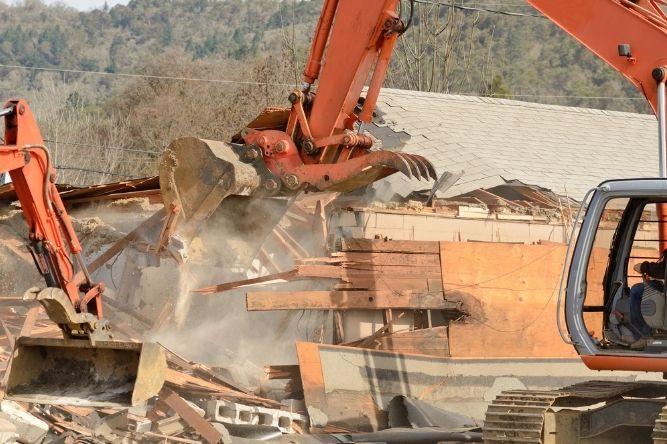
While the planning process is similar, residential and commercial demolition projects differ in scale, equipment, and complexity.
Residential demolition typically uses smaller equipment like mini-excavators to account for tighter spaces and smaller structures. Projects often complete faster due to reduced scale. Permits are generally simpler, though the same safety requirements apply.
Commercial demolition frequently involves larger structures, allowing for heavier equipment that can speed up the process. However, commercial projects often face additional regulatory requirements, environmental assessments, and coordination with surrounding businesses. The permitting process may be more complex, and projects typically take longer due to scale.
Both types require licensed, insured contractors and the same fundamental preparation steps.
Before the first wall comes down, confirm you have:
Demolition is a complex process that requires professional expertise, careful planning, and strict adherence to safety and legal requirements. By following these steps and working with experienced professionals, you can ensure your Winnipeg demolition project proceeds smoothly, safely, and on schedule.
For professional demolition services in Winnipeg including permit assistance, asbestos removal, and complete project management—contact Bulldog Demolition & Asbestos Removal to discuss your project.
About the Author: Bulldog Demolition & Asbestos Removal
